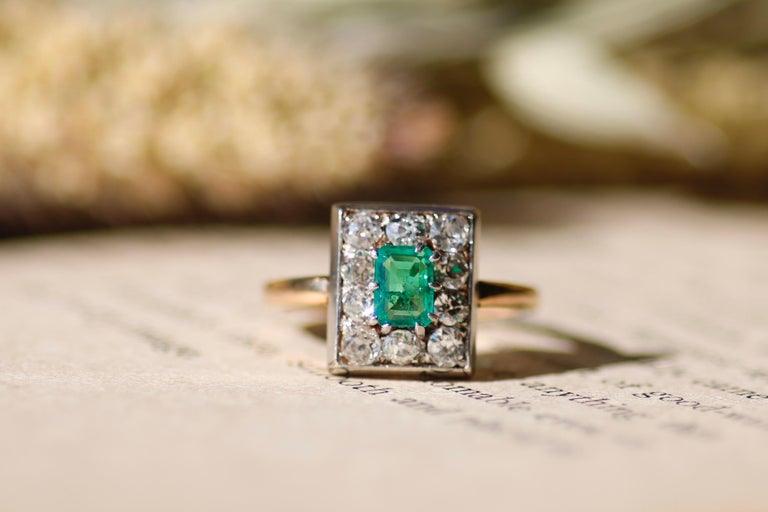
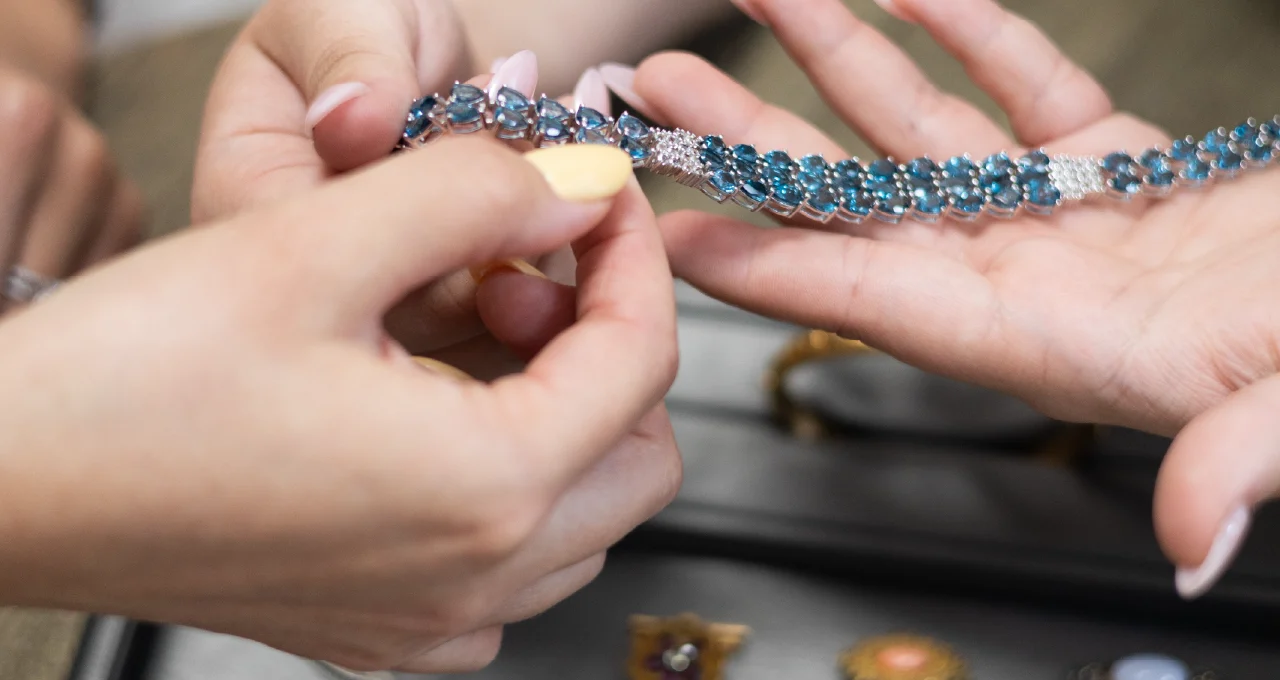
For those of you born in March, you are fortunate to have not one, but two birthstone options!
The birthstones for March are the soothing aquamarine and the enigmatic bloodstone.
GO TO AQUAMARINE
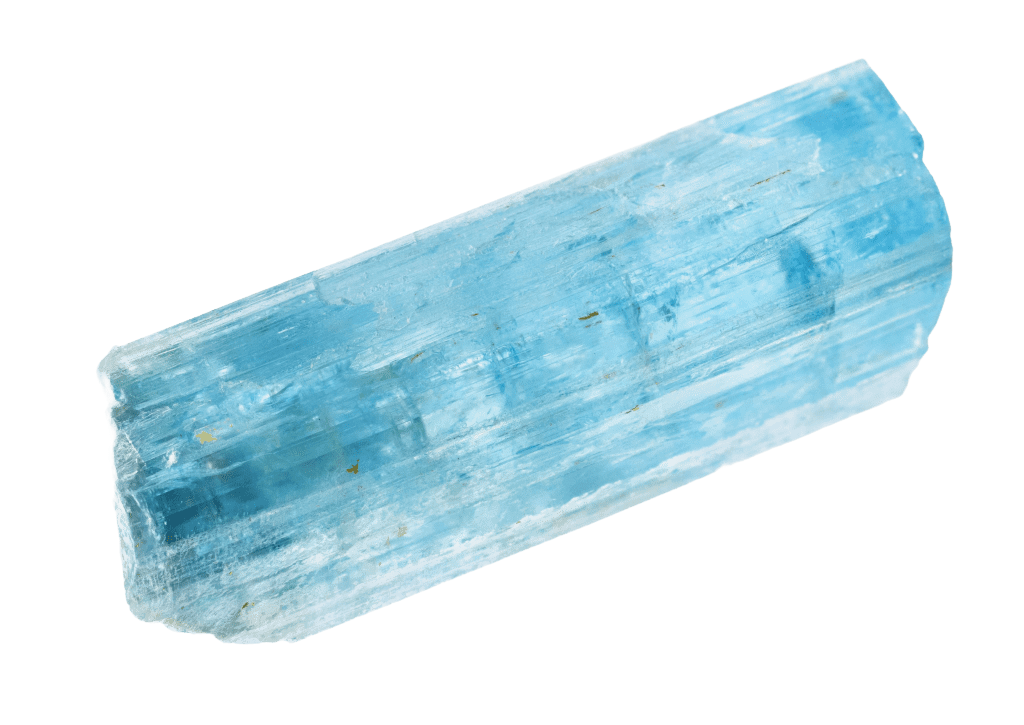
All About Aquamarine
AQUAMARINE PROFILE
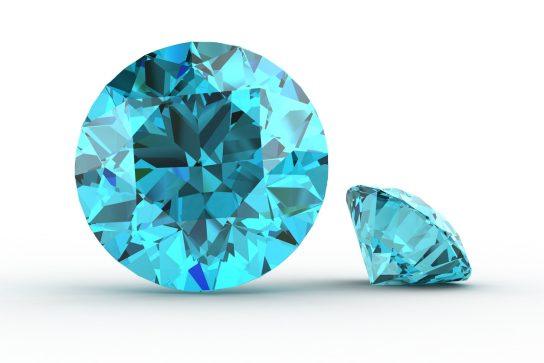
| COLOR | Light blue to dark blue, blue-green (caused by trace amounts of iron impurities) |
| HARDNESS | 7.5-8 on Mohs scale |
| TOUGHNESS | Fair to Good |
| ETYMOLOGY | From Latin meaning “sea water” |
| ANNIVERSARY MILESTONE | 19th Anniversary Gemstone Gift |
| ORIGIN | Brazil is the largest producer, but can be found worldwide |
| COMMON TREATMENTS | Can be heat-treated; helps remove the greenish/yellowish color to make the blue more prominent |
| Family | Beryl; same family as Morganite and Emerald |
| CARE RECOMMENDATIONS | Use soapy water and a soft cloth, rinse well, and avoid ultrasonic cleaners or steamers. |
| SETTING RECOMMENDATIONS | Since aquamarines are prone to breakage due to their toughness rating, it’s recommended to choose smooth-edged stones, like round or oval, and a highly protective setting, such as a bezel. |
| CHEMICAL REACTIONS | Aquamarine can be damaged by hydrofluoric acid, a chemical found in home rust removers and strong cleaners. |
| ULTRASONIC JEWELRY CLEANERS | These, along with the solution bath used, are generally safe for aquamarines. However, the vibrations generated can cause damage to stones with liquid inclusions or fractures. For this reason, it’s recommended to always consult with a certified gemologist. |
| LIGHT EXPOSURE | Aquamarines remain stable under all light sources, including sunlight, artificial light, and ultraviolet light. The exception is the Maxxie beryl, a dark blue variety that very rarely naturally occurs. |
| RANDOM FACT | Aquamarine has retained the title of Colorado’s State Gem since 1971. |
The World’s Largest Aquamarine: The Dom Pedro
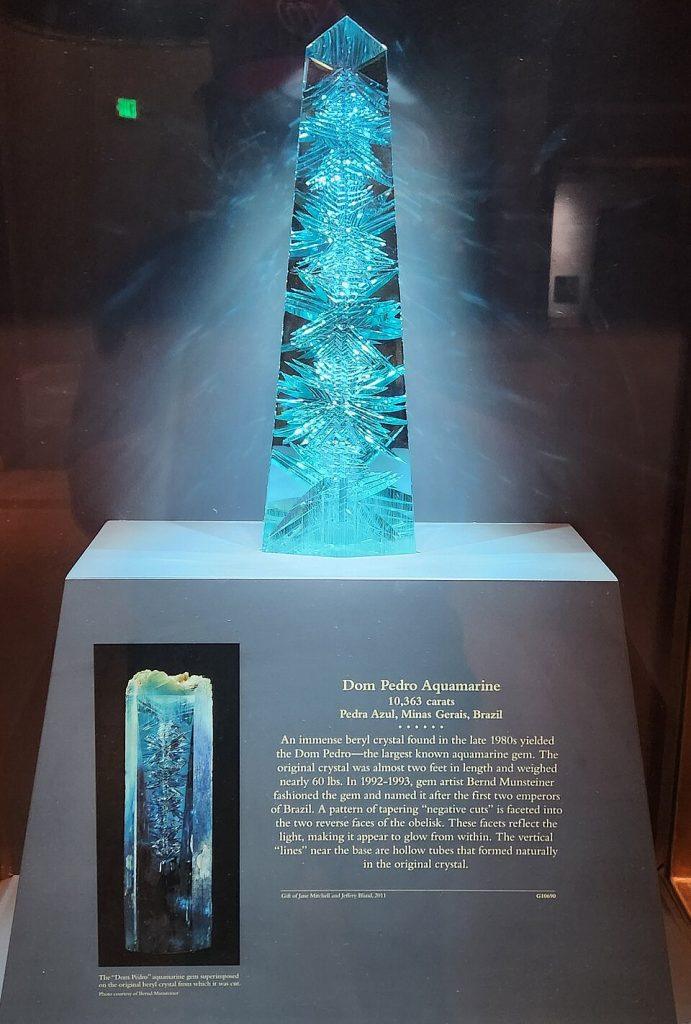
The largest known aquamarine resides in the Smithsonian Institute’s National Gem and Mineral Collection and is named The Dom Pedro. Discovered in Brazil in the 1980s, it is named after the two Brazilian emperors from the 1800s who helped establish Brazilian independence from Portugal.
The Dom Pedro was originally three feet long and weighed more than 100 lbs, but was dropped by the prospectors, splitting into three pieces. Two pieces were sold for jewelry making, while the third piece is what we know today as the largest aquamarine in the world, standing at 14” tall and weighing approximately 10,000 carats.
After Brazil, the gem eventually made its way to the workshop of Bernd Munsteiner, a German gem artist who was tasked with cutting it. A graduate of a design school who studied painting, metal sculpture, and jewelry design, the aquamarine came to him at a time when he was exploring gemstones as art rather than adornment, leaving him “fascinated and impressed” by the opportunity and challenge.
After four months of study and hundreds of concept sketches, followed by another six months of cutting, Munsteiner eventually cut the aquamarine into the obelisk shape it holds today. Munsteiner made use of the natural inclusions in the design, a concept that allows The Dom Pedro to achieve an exceptional level of brightness and sparkle under the right conditions.
Munsteiner is widely considered one of the most talented gem artists of the 20th century and is credited with being the “Father of the Fantasy Cut,” which contributed to the modernization of gem cutting.
The Dom Pedro can now be viewed at the Smithsonian Institution’s National Museum of Natural History in Washington, D.C., alongside the Hope Diamond, Logan Sapphire, and Rosser Reeves star ruby.
Aquamarine Historical Uses & Spiritual Correspondences
Egypt
- Associated with the goddess Isis
- Protection for sailors during sea voyages
- Enhances youth
- Represents eternal life and was placed in tombs and burial sites to accompany the deceased in the afterlife
Ancient Greece & Rome
- Believed to have fallen from the treasure chest of a mermaid
- Associated with Poseidon/Neptune, the god of the sea
- Provides protection during travel, particularly by sea
- Grants sailors esoteric knowledge of the sea and its secrets
- Associated with Aphrodite, the goddess of love and beauty
- Aphrodite adorned her mermaid daughters’ hair with aquamarine
- Nymphs wept tears of joy in the form of aquamarine at the approach of Dionysus in his panther-drawn chariot
- In Rome, aquamarine was believed to guard against spite and envy. Matrons would regularly wear them to deter ill-willed spirits
- Believed to bring tranquility and accord into marriage relationships
- Believed to cure ailments related to the throat and respiratory system

Medieval Times
- Enhances mental and emotional well-being: reduces stress, anxiety, and emotional turmoil
- Soothes the mind
- Promotes mental clarity
- Enhances tranquility
- Divination gemstone – used as a pendulum
- Believed to reveal hidden truths
- Protection from malevolent forces
- Favored among clergy members and used in religious artifacts
- Purity & Fidelity
- Medieval couples exchanged rings as a symbol of commitment
Renaissance
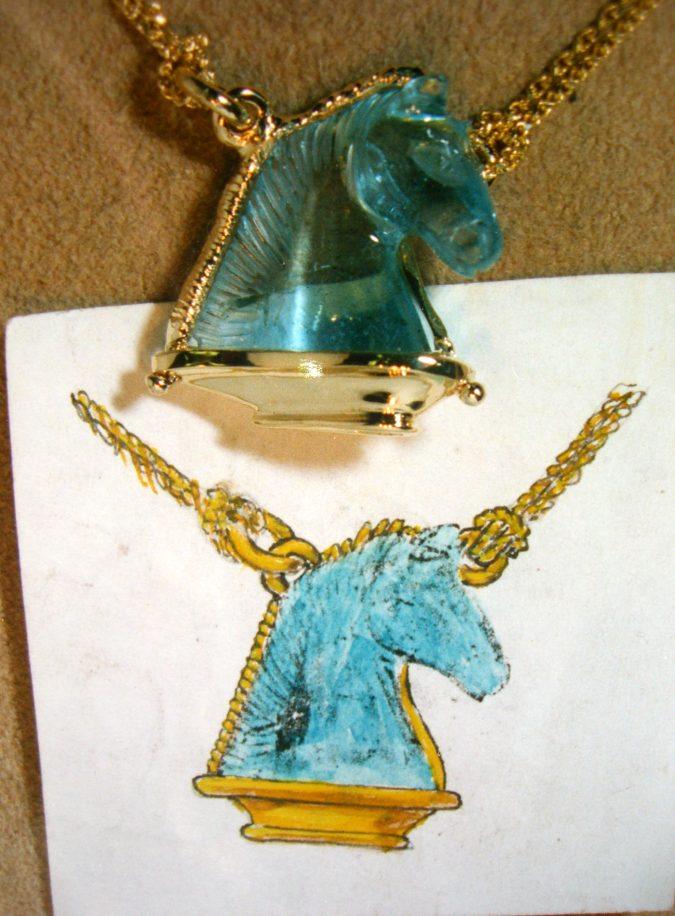
- Represents:
- Sophistication
- Royalty
- Wealth
- Connection to the mystical
- Love and Commitment
India
- Associated with Varuna, the goddess of the cosmic ocean (Hindu)
- Enhances spiritual awareness and meditation practices
China
- Associated with water; a symbol of clarity and purity
- Attracts good fortune
- Protects against negativity
- Enhances harmony in relationships
Victorian Era
- Represents:
- Love
- Tranquility
- Deep emotions
Modern Gemology
- Associated with the throat chakra
- Clear communication
- Self-expression
- Emotional healing
- Release negative emotions
- Experience inner peace
- Calmness
- Clarity
- Spiritual Connection
- Protection
- Rejuvenation
Christianity
- The Virgin Mary and her purity
- Protection against temptation and impurity
- Possibly used in past religious artifacts, such as rosary beads
Modern Astrology
- Pisces and Aries, the two zodiac signs that fall within the month of March. Symbolically, it probably aligns more with Pisces.
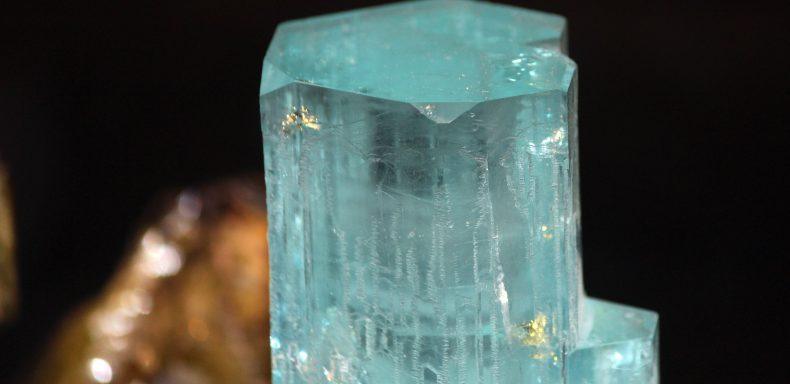
"Aquamarine crystal" by greyloch is licensed under CC BY-SA 2.0 

 .
.
All About Bloodstone
BLOODSTONE PROFILE
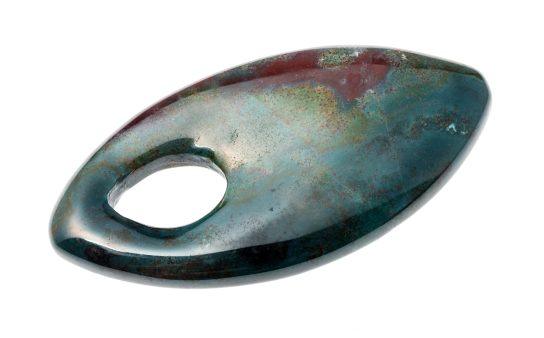
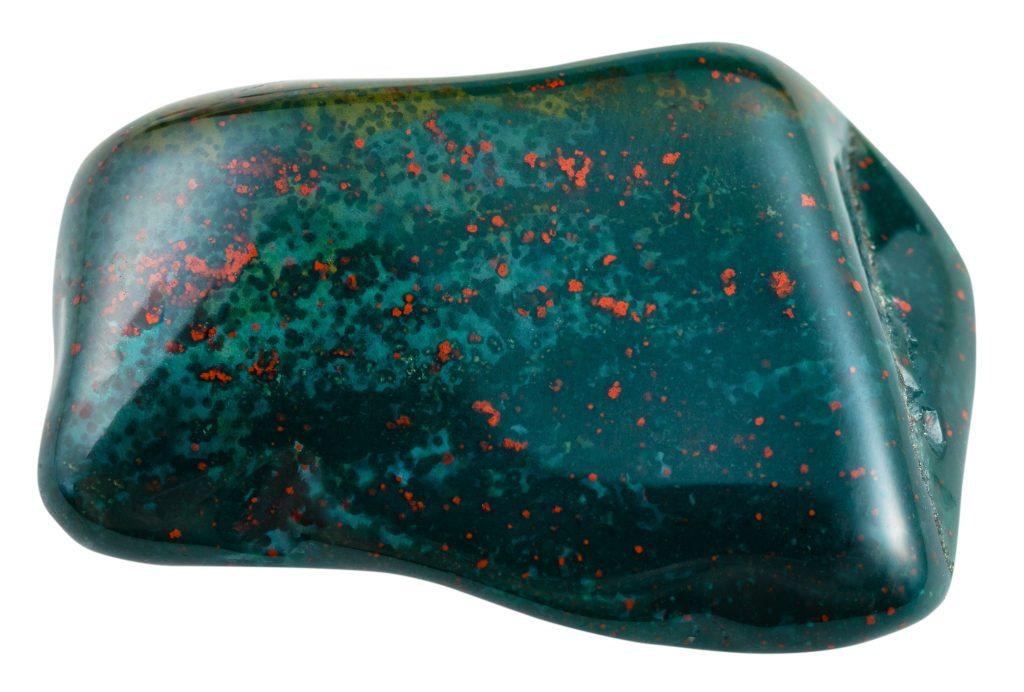
| COLOR | Green, ranging from dark, almost black green to mossy green, with specks of red (specks caused by inclusions of iron oxide) |
| HARDNESS | 6.5-7 on Mohs scale |
| TOUGHNESS | Good |
| ETYMOLOGY | The name “Bloodstone” derives from the belief that the stone’s red specks represent the sacred blood of Jesus Christ in Christianity. Bloodstone is also known as “heliotrope,” which comes from the Greek “helio,” meaning “sun,” and “tropen,” meaning “to turn.” This reflected an ancient Greek belief that placing bloodstone in water would turn the sun red. |
| ORIGIN | India is the largest producer, but it is also found in Brazil, Australia, China, and the U.S., among other countries. |
| COMMON TREATMENTS | Not typically treated |
| FAMILY | Chalcedony; same family as Agate, Carnelian, Chrysoprase, Jasper, and Onyx |
| CARE RECOMMENDATIONS | No specific care instructions. Warm soapy water and a soft-bristle brush are recommended. Caution should be used in the mechanical cleaning of bloodstone (ultrasonic and steam cleaning), and it is always recommended to consult with a gemologist for your specific stone(s). Avoid exposure to intense heat. |
| SETTING RECOMMENDATIONS | Bloodstone is considered an excellent gemstone choice for jewelry. With no cleavage and a relatively good hardness and toughness rating, bloodstone is considered suitable for any type of jewelry. Bloodstones are sometimes polished, but are most often found in cabochon or carved form in jewelry and decor. |
| CHEMICAL REACTIONS | Like most gemstones, it is recommended to keep them away from harsh chemicals, sometimes found in household cleaners and gardening solutions. |
| ULTRASONIC JEWELRY CLEANERS | Caution is advised when considering ultrasonic cleaners for bloodstone care. While typically safe, it’s recommended to consult a certified gemologist for your specific stone(s). |
| LIGHT EXPOSURE | Typically safe. |
| RANDOM FACT | While heliotrope may be the most common type of bloodstone found in modern jewelry, there is another type of bloodstone called “plasma,” which is more opaque and has fewer red spots than heliotrope. |
Bloodstone Lore and Myths
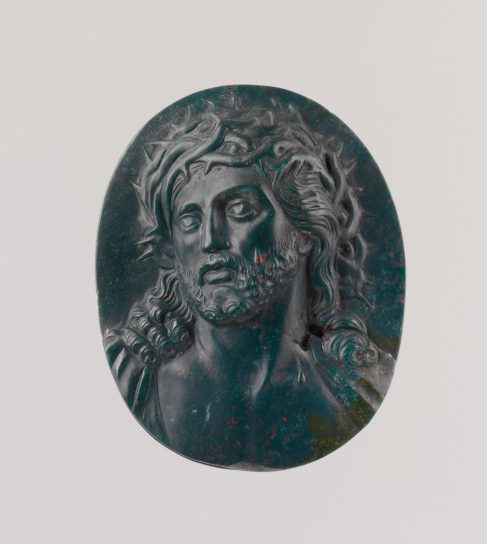
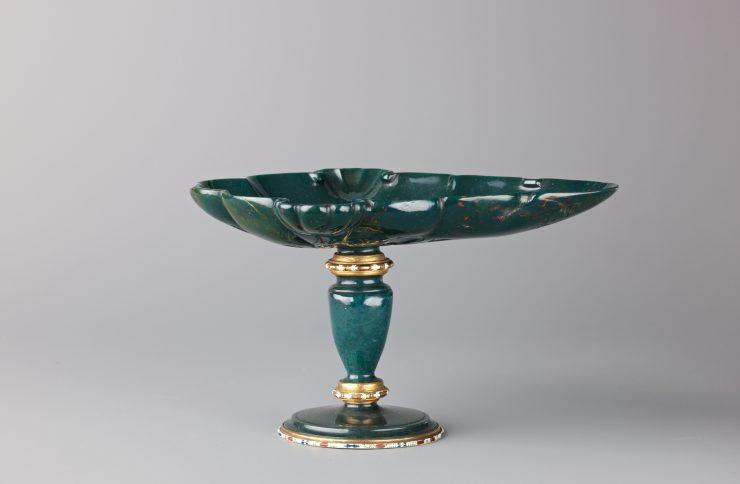
While bloodstone is not especially popular these days, it was a pretty hot topic in antiquity, with several myths and lore surrounding it. Probably the most well-known myth is that the red spots in the stone were caused by the blood of Christ. It was said that the fallen blood landed on green stones at his feet, and thereafter, what we know as bloodstone came into existence. Interestingly, the traditional Christmas colors of red and green are also attributed to aspects of Christ: green for everlasting life and red for Christ’s blood.
Myths and the use of bloodstone date back even further than Christianity. Take a look at our list of usages throughout history to gain a deeper understanding of the profound cultural and spiritual relevance bloodstone has held:
Historical Uses & Spiritual Correspondences
Egypt
- Placed in Egyptian tombs to protect the deceased
- Bloodstone was referred to as the “Blood of Osiris”
- Believed to help to defeat enemies
- Enhances strength
- Used for invisibility
Babylon
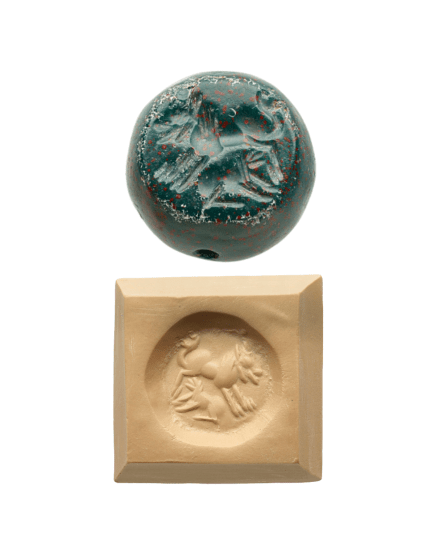
- Used for seals and amulets
- Used for divination
Ancient Greece & Rome
- Worn by Roman and Greek soldiers into battle as protection against blood loss in the case of being wounded.
- Worn as a charm against the bites of venomous creatures
- Pliny the Elder (1st century) mentioned that magicians used bloodstone for invisibility
- Damigeron, a 2nd-century author, wrote about bloodstone’s ability to make rain. He also believed it was useful in divination and would preserve youth and health. Damigeron is credited with writing one of the first metaphysical gemstone grimoires entitled De Virtutibus Lapidum, or “The Virtue of Gemstones.” His writings on gemstones still have influence today.
Scottish-Gaelic Folklore
- Bloodstones were believed to be created by the Northern Lights, also known as the Na Fir-Chlis or “The Nimble Men.” It is believed that the Nimble Men are fighting an everlasting battle in the sky in the form of dance. Any blood spilled from the battle gathers as a red cloud beneath the aurora borealis before falling to earth, where it becomes bloodstones.
13th Century
- Albert the Great, a German philosopher and teacher of St. Thomas Aquinas, referred to bloodstone as the “stone of Babylon.”
Medieval Times
- Considered useful for animal husbandry
India
- Believed to help slow bleeding by dipping the stone in cold water and then placing it on the wound. Iron oxide, the cause of the red spots in bloodstone, is considered an astringent, which may lend this belief some scientific truth.
Modern Gemology
- Associated with the root or sacral chakra (base of the spine; stability, grounding, and survival instincts)
- Protection against stress and circulation issues
- Confidence and self-worth enhancement
- Purifies blood
- Detoxifies major organs, especially the liver, kidneys, and bladder
- Protection from negative and unwanted influences
Christianity
- Referred to as the “Blood of Christ.” As previously mentioned, bloodstone is said to represent the blood of Christ at his death. Also sometimes referred to as the “martyr’s stone.” This belief was particularly popular in the Medieval Times, but is still fairly well-known today.
Modern Astrology
- A traditional birthstone for March, bloodstone may have an ancient association with Aries, the god of war, for whom March is named.
- Pisces and Aries, the two zodiac signs that fall within the month of March. Symbolically would probably align more with Aries.
March Birthstones: A Tale of Two Crystals
While aquamarine may be the more popular March birthstone today, bloodstone is considered a traditional March birthstone by many sources. The idea of birthstones may have originated from an ancient interpretation of the Christian Bible. The 1st-century historian Josephus believed that the twelve gemstones of the breastplate of Aaron (Exodus 28:17-30) could be linked to the twelve astrological signs. Each stone was believed to represent a specific virtue of people born in that astrological sign.
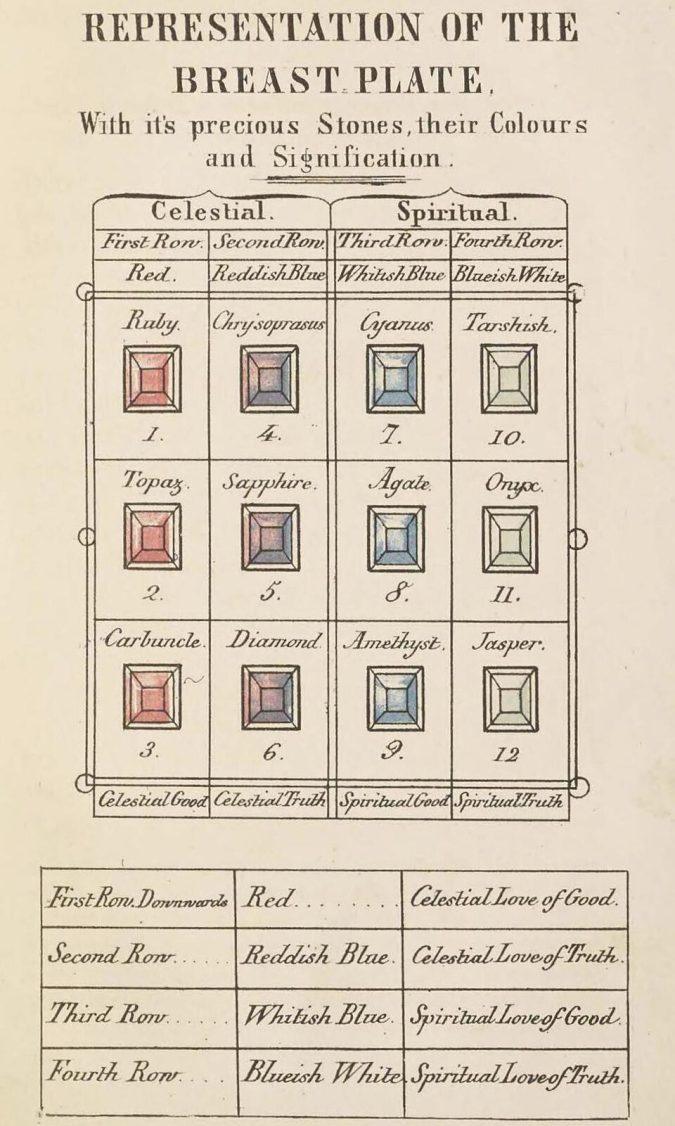
The list of stones in Exodus was eventually replaced by the Foundation Stones listed in Revelation 21:19-20, then by another list created by the National Association of Jewelers in 1912, and a few others. The list we commonly use today was created by the Jewelry Industry Council in the United States in 1952, which lists both Aquamarine and Bloodstone as March birthstones.
With vastly different appearances and folklore, the birthstones of March offer two beautifully contrasting stones for you to enjoy: the celestial, soothing blue of aquamarine or the earthy, grounding tones of bloodstone. Which one do you prefer?
SHOP AQUAMARINE JEWELRY
SHOP ALL BIRTHSTONE JEWELRY
SOURCES
- Weldon, Robert, An Introduction to Gem Treatments, accessed Feb 25, 2026
- Pallardy, Richard, Aquamarine | Birthstone, Healing Properties, March | Britannica, accessed Feb 25, 2026
- Clarke, Gavin, Aquamarine Gemstone Information: Colors, Meaning & More, accessed Feb 25, 2025
- Internationl Gem Society, Aquamarine Durability – International Gem Society – IGS – International Gem Society | International Gem Society IGS, updated Aug 5, 2024, accessed Feb 25, 2026
- International Gem Society, Six Famous Aquamarines – International Gem Society – International Gem Society | International Gem Society IGS, updated Feb 20, 2025, accessed Feb 25, 2026
- Adler, Jerry, Introducing the Dom Pedro Aquamarine, March 2013, accessed Feb 25, 2026
- American Gem Trade Association, Bernd Munsteiner, Inventor of the Fantasy-Cut Gemstone, Dies, accessed Feb 25, 2026
- Smithsonian Science, Smithsonian ScienceMagnificent Dom Pedro aquamarine to go on view in the Smithsonian’s Natural History Museum – Smithsonian Science, Dec 3, 2012, accessed Feb 25, 2026
- Madonna, The Historical Benefits of Aquamarine: A Complete Guide – Giacoloredstones.com, September 2, 2024, accessed Feb 25, 2025
- Madonna, The Metaphysical Properties of Aquamarine: A Full Guide – Giacoloredstones.com, Aug 11, 2023, accessed Feb 25, 2026
- Smith’s Jewelers, A Brief History of Aquamarine and Its Many Myths and Legends – Smith’s Jewelers, Mar 6, 2023, accessed Feb 25, 2026
- Madonna, The Discovery of Aquamarine: The Gem’s Mystical Origins – Giacoloredstone.com, Sept 15, 2023, accessed Feb 25, 2026
- Webster, Richard, The Encyclopedia of Superstitions (Llewellyn Publications, 2008), pages 32 and 36
- Gemological Institute of America (GIA), March Birthstones | Aquamarine & Bloodstone Meaning | GIA, accessed Feb 25, 2026
- GIA, Gemstone Information | Gemstone Hardness and Toughness Explained. | Stuller, accessed Feb 25, 2026
- Arem, Joseph, Bloodstone Value, Price, and Jewelry Information – Gem Society – International Gem Society | International Gem Society IGS, updated Feb 16, 2025, accessed Feb 25, 2026
- American Gem Society (AGS), Bloodstone Gemstone Origin, Uses | March Birthstone, accessed Feb 25, 2026
- AGS, The Folklore & Legend of Bloodstone | March Birthstone, Apr 7, 2020, accessed Feb 25, 2026
- Habold, Agathe, The Nimble Men | Discover the Highlands and Islands of Scotland, accessed Feb 25, 2026
- Albertus Magnus, De Mineralibus, II.5. in: id., Opera omnia, ed. Borgnet (Paris, 1890), vol. 5, Mineralia: pp. 1–116; on p. 36. Cf. Peter J. Barta, The Seal-ring of Proportion and the magic rings (2016), p. 50f.
- Pliny the Elder, Natural History, xxxvii.(60).165. His account was copied verbatim by Isidore of Seville(c. 560-636), Etymologies, XVI,7,12. Cf. Peter J. Barta, The Seal-ring of Proportion and the magic rings (2016), p. 47.
- Damigeron, De lapidibus (Abel), ch. II, p. 165, lines 1-19; Damigeron (Pitra), ch. XIX, vol. iii, p. 325-326. Cf. Peter J. Barta, The Seal-ring of Proportion and the magic rings (2016), pp. 48-49.
- De Virtutibus Lapidum: The Virtue of Stones — The Occult Library, accessed Feb 25, 2026
- Pavitt, Kate and William Thomas, The Book of Talismans, Amulets and Zodiacal Gems, [1922] p. 138
- Bloodstone Crystal: Meaning, Properties, Benefits | Astrology.com, accessed Feb 25, 2026
- IGS, The Foundation Stones of the New Testament – International Gem Society – International Gem Society | International Gem Society IGS, Feb 3, 2022, accessed Feb 25, 2026